Spotlight on Emerging Leaders Fellowship (ELF) Program 2025
Dr Christine Andrews

Implementation and health services research to save babies’ lives and support improvements in clinical care.
An early-to-mid career perinatal implementation science researcher. Her research uses implementation and health services research to save babies’ lives and support improvements in clinical care. With a vision to bridge the evidence-practice gap in maternity care, through implementing responsive solutions to improve uptake of safer pregnancy strategies, she is a key driver of the Safer Baby Bundle initiative, leading the national evaluation of its impact. Dr Andrews is also an emerging leader for consumer involvement in research and lead a national project to enhance bereaved parents’ involvement in stillbirth research in partnership with the Stillbirth Foundation Australia.
Dr Andrews joined the Stillbirth CRE in 2018 after completing her PhD in burn injury prevention with The University of Queensland. She now co-lead the Implementing Stillbirth Prevention Strategies and Consumer Engagement research programs at the Stillbirth CRE.
A/Prof Danielle Muscat

A/Prof Danielle Muscat leads an innovative program of translational research focused on the development, evaluation and scale-up of interventions to improve health literacy at both community and systems levels.
Danielle Muscat, BPsych (Hons 1), PhD, FHEA, is an Associate Professor at the University of Sydney Health Literacy Lab, the Director of Research for the NSW Health Statewide Health Literacy Hub and Advisor on Health Literacy to the World Health Organization. She leads an innovative program of translational research focused on the development, evaluation and scale-up of interventions to improve health literacy at both community and systems levels.
CI Muscat is a world leader in health literacy; ranked 7th (top 0.023%) and #1 Early Career Researcher globally on Expertscape (out of >34,000 researchers worldwide), with >130 peer-reviewed publications, >;$10M competitive research funding and successive research fellowships since 2018, including an ARC Discovery Early Career Researcher Award (DECRA; 2023-2026). Her research has been recognised through the International Health Literacy Association Jurgen Pelikan Award (2024), Sydney Health Partners Award for Translational Research Addressing a Health Priority (2024) and the US Institute for Healthcare Advancement’s International Health Literacy Award (2022).
Dr Dongli Liu
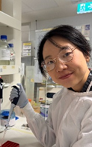
Dr Liu is cancer researcher specialising in precision medicine in gynaecological cancers.
Dr Dongli Liu is a cancer researcher specialising in precision medicine in gynecological cancers. Dr Liu completed her PhD through an NHMRC-funded project that explored the genetic pathways influenced by dietary fat using a twin study model. Since joining the Gynaecological Cancer Research Group as a postdoctoral research fellow at UNSW in 2018, Dr Liu has led a number of projects including identifying biomarkers and developing patient-derived laboratory models.
Dr Dorinda ‘t Hart

Dr ‘t Hart’s research interests are in the latest breast cancer screening research
Dr ‘t Hart is an early career researcher with a sociological background working in the School of Population and Global Health. I completed my PhD in 2023 and have since worked on two ARC and NHMRC funded projects, the latest being breast cancer screening research. This project was not able to continue funding and so I am at risk of moving across projects rather than moving forwards in my career.
Dr ‘t Hart am passionate about community engagement in research and enjoy working closely with consumers and partner organisations. She is also enjoy wrestling with sociological concepts and use them to inform my health promotion research. Her interest in women’s health comes from my PhD research in abortion narratives. She is also embedded within in my own family and enjoy spending time with my children. Dr ‘t Hart is keen to use her interdisciplinary connections, my theoretical grasp of family literature and lived experience in family to improve and promote health for women and their children and families.
Dr Helen Macpherson

Dr Macpherson’s research has demonstrated important links between physical health, lifestyle behaviours and neurocognitive function. I have conducted numerous (>10) randomised controlled trials to investigate the cognitive effects of nutritional and exercise interventions.
Dr Helena Macpherson leads the Exercise and Nutrition for Cognitive and Mental Health group at the Institute for Physical Activity and Nutrition (IPAN) at Deakin University. She is a Senior Research Fellow and former NHMRC-ARC Dementia Training fellow (2017-2022). She has a background in psychology and the cognitive neuroscience of ageing. She conducts research into identifying risk factors for cognitive decline, understanding trajectories of cognitive decline, and reducing dementia risk or progression via targeted lifestyle interventions. Using a range of neuroimaging techniques, my research has demonstrated important links between physical health, lifestyle behaviours and neurocognitive function. Dr Macpherson has conducted numerous (>10) randomised controlled trials to investigate the cognitive effects of nutritional and exercise interventions. Her innovative research has attracted $4 million funding for dementia and brain health research.
Dr Saije Endacott

Dr Endacott is currently investigating the role of the Renin Angiotensin System in pregnancy and reproductive health.
Dr Saije Endacott is a Research Associate at the University of Newcastle and is affiliated with the Women’s Health Research Program at the Hunter Medical Research Institute. Dr Endacott was awarded her PhD in Medical Biochemistry in February 2021. Her doctoral research involved investigating the role of the Renin Angiotensin System in pregnancy and reproductive health. Since being awarded her PhD, Dr Endacott has expanded her research interests into First Nations health in partnership with the First Nations community. Dr Endacott works with the Gomeroi Gaaynggal Study, where she is co-leading the co-design and development of a Breastfeeding Support Program. Dr Endacott has published 17 research articles and two websites. Additionally, she has contributed significantly to successful national and local research grants totalling $3.5M (including two National Medical Research Future Fund applications).
As a non-Indigenous early-career researcher working in both reproductive science and First Nations health, Dr Endacott is committed to leading work that is both scientifically rigorous and community-driven.
Dr Paula Binks
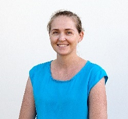
Dr Binks has implemented numerous epidemiological, data-linkage, cohort, and clinical trial studies among Australia's First Nations Peoples.
Paula Binks is the Co-Deputy Director of the Viral Hepatitis research program at Menzies School of Health Research. She has worked in health research since 1998, and during this time has implemented numerous epidemiological, data-linkage, cohort, and clinical trial studies among Australia's First Nations Peoples. Paula understands the intricacies of working in remote Australia and has extensive experience building trusting and respectful partnerships with First Nations individuals and communities.
Paula has also worked as a palliative care nurse, which has inspired her research dedicated to improving hepatitis B and hepatocellular carcinoma (HCC) outcomes for First Nations people. She has demonstrated that ‘care on country’ improves health outcomes for Aboriginal Australians with hepatitis B and HCC. Paula has also created a successful model for working with translators to develop health resources for different cultural and linguistic groups across the NT.
Dr Lucy Furfaro

Dr Furfaro is investigating the role of bacteriophages (natural predators of bacteria) in the perinatal period and as future targeted therapeutic agents – aiming to contribute to improving outcomes for mums and their babies.
Dr Lucy Furfaro is an NHMRC Emerging Leadership Fellow within the Division of Obstetrics and Gynaecology at the University of Western Australia (UWA). After completing her PhD in 2019, she was awarded several fellowships to accelerate her research focusing on the prevention and treatment of bacterial infections such as Group B Streptococcus, which are a major cause of death and disability during pregnancy and early life. Lucy leads the perinatal phage team in Perth, Western Australia and is investigating the role of bacteriophages (natural predators of bacteria) in the perinatal period and as future targeted therapeutic agents – aiming to contribute to improving outcomes for mums and their babies.
Dr Luciana Massi

Dr Massi is evaluating strengths-based programs to improve health, well-being and birthing outcomes for Aboriginal and Torres Strait Islander mothers, babies and families.
Luciana Massi is Postdoctoral Research Fellow in Indigenous Health Research at Mater Research Institute. Completing her PhD through the Molly Wardaguga Institute for First Nations Birth Rights, Charles Darwin University, Luciana’s work focuses on evaluating strengths-based programs to improve health, well-being and birthing outcomes for Aboriginal and Torres Strait Islander mothers, babies and families. She has worked across studies including the Indigenous Health Research Priorities Study, the co-design of the Stronger Bubba Born resources for First Nations communities at the NHMRC Stillbirth Centre for Research Excellence and is leading the Implementation Evaluation of the Strong Families Study, longitudinal birth cohort study.
Luciana has over 18 years’ research experience in public health, mixed methods research, health services research, post graduate teaching (health promotion) and workforce capacity building. She has extensive experience conducting qualitative research on various evaluation studies at Mater Research, University of Queensland, Institute for Urban Indigenous Health, University of Sydney and The George Institute for International Health. She has a Bachelor Business Communication and Master of International Public Health. Her strong interests in all aspects of public health and social justice, focus on working with varied population groups and advancing the needs and support of women, children, and families.
Dr Louise Koller-Smith

Dr Koller-Smith is a recently fellowed rheumatologist working in Newcastle, NSW. I also work for the University of Newcastle as a lecturer and clinical lead for the Joint Medical Program. I am in the process of finalising my PhD which investigates potentially modifiable risk factors for rheumatoid arthritis in Australian women. I have a delightful toddler daughter and love hiking, the ocean and ballet.