Advancing Women Researchers, Transforming Women's Health
WHRTN supports the careers of women in research through national training, programs, networking and funds research projects to improve women's health and wellbeing.
WHRTN's initiatives have shaped meaningful and lasting impact through:
63 funded EMCR awards, resulting in:
37 Published Papers
Another 10 currently under review
55 conference presentations, including 20 internationally
66 EMCRs received Leadership Development and Mentoring, outcomes include two promotions to the level of A/Prof
27 Career Development Webinars, attended by ~1,700 and YouTube views ~1,900
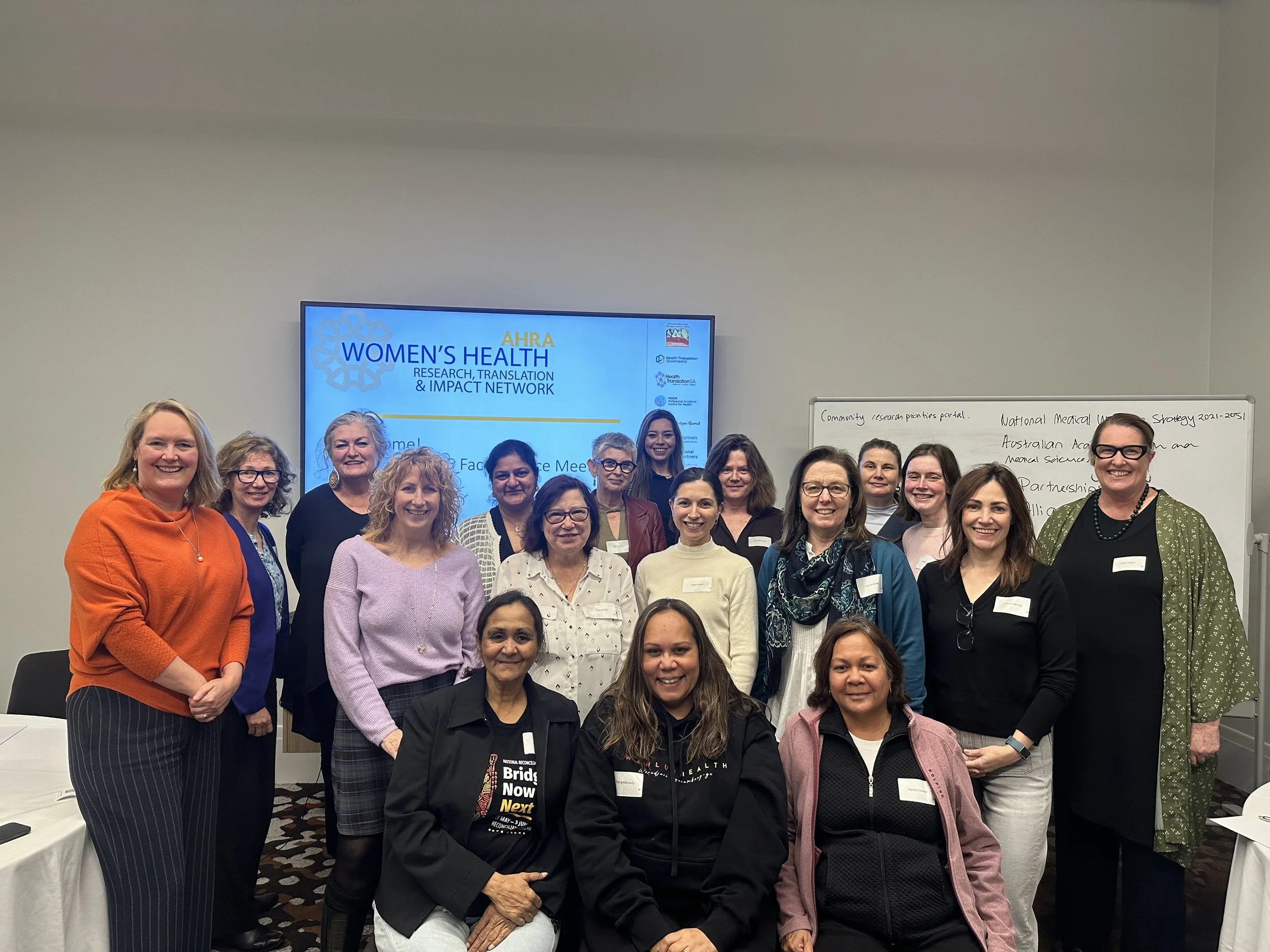
Following the successful steering committee meeting held in Melbourne in August, WHRTN is preparing the work plan for 2026 which will focus on the implementation of a final Emerging Leaders Fellowship (ELF) program and the implementation by the Consumer and Community Sub-committee chaired by consumer Malvika Kadwadkar of the Wise Women’s Leadership Project.
Chair of the Steering Committee, Professor Deborah Turnbull said, "As we prepare for our funding from MRFF to conclude in 2026, we continue to contribute to the development of a sustainable workforce of women researchers addressing women’s health needs. We are doing this through another roll out in 2026 of our successful Fellows program and by creating leadership opportunities for them in our governance structure.”
The final steering committee for 2026 in October focussed on ensuring we have mechanisms in place to sustain and embed WHRTN’s contributions to research and workforce development. A light-touch governance restructure will give our Fellows the opportunity to submit expressions of interest to join the Consumer and Community and Workforce Development sub-committees. This will keep the sub-committees refreshed and active and will help the Fellows to develop leadership skills to initiate and organise activities within WHRTN and their local institutions.
The learnings from WHRTN will be disseminated through a series of publications co-authored by the WHRTN team and steering committee members. Planned publications will examine ways for engaging consumers in priority areas and the experiences of academics and consumers in co-production of real-world research and practice. Another planned paper addresses how to inform needs and identify gaps in workforce development.
The overall evaluation of WHRTN will be the subject of an additional paper. This will include a document analysis of our nine national projects aligned with the National Women’s Health Strategy (2020-2030), co-produced by WHRTN researchers and consumers.
The outcomes of these grants were reported at the steering committee meeting and included enhanced consumer and community engagement, capacity building and career development and the fostering of collaborative networks and institutional partnerships. These projects have been successful in leveraging initial funding to secure significant follow-on grants from MRFF and NHMRC. Knowledge generated from the grants have been translated into digital health tools, public health directories and sexual health models.
As we approach our final year of funding, WHRTN members remain interested in broader opportunities for boosting the number of women in our health and medical sciences workforce. Prof Teede, Chair of the WHRTN Research Committee also Chaired the development of the Academy of Health and Medical Sciences Decadal Plan, which was recently launched by the Assistant Minister Rebecca White MP in Canberra. The investment in gender equity for health and medical researchers is welcomed by WHRTN members.
Find out more about WHRTN’s Research, Consumer and Community Involvement (CCI), Indigenous and Workforce Development Programs here.