Spotlight on Emerging Leaders Fellowship (ELF) Program 2026
Jodie Scott

Jodie is a Research Fellow at the Rosemary Bryant AO Research Centre at Adelaide University and the Co-design and Impact lead for Spark – a social change initiative addressing loneliness.
She holds a PhD in Psychology and is broadly interested in the life course approach to health and wellbeing, including preventive strategies, psychological approaches to behaviour change and health promotion. Her work employs design thinking and co-design methodologies, and she has played a key role in developing the co-design, qualitative and evaluation techniques used across Spark. Initially aimed at women in midlife, Spark creates community-led solutions to loneliness by engaging volunteers, activating places and spaces, and building local connection systems to improve wellbeing. As part of her involvement in this project, she has been fortunate to collaborate with a range of women’s health leaders, dynamic creative thinkers and problem solvers across academia, public health policy, journalism, business, and community. Jodie has had a previous career in design and utilises these skills to activate engagement with the community and partners.
Dr Josephine Okurame

Josephine is a lecturer in the School of Medicine at the University of Queensland and an AI researcher and educator working at the intersection of health, education, and digital innovation. Her work focuses on strengthening pathways into healthcare careers, with a strong emphasis on widening participation and improving equitable access to medical education. She is also engaged in digital health research, with a focus on the ethical and responsible integration of AI into healthcare services.
Alongside her academic role, Josephine is committed to translating research into meaningful real world impact. Her work bridges the gap between evidence and everyday life, particularly for women navigating identity, family, and career transitions. Her research and public engagement explore how social, cultural, and structural factors shape women’s quality of life, wellbeing, and long term outcomes, grounded in a social determinants approach to health.
She also delivers digital education and AI trainings and keynotes that support women to build capacity, and confidence in a changing workforce. Through this work, she equips women, with practical tools to adapt, lead, and thrive while maintaining family stability.
Dr Kasuni Akalanka

Kasuni is a biochemistry academic and researcher with over 15 years of experience across Australia and Sri Lanka. She is currently attached to Rural Health Research Institute, Charles Sturt University and her research focuses on breast cancer, metabolic health, and population health, with an emphasis on translating molecular insights into population-level outcomes.
She is a Senior Collaborator in the Global Burden of Disease Study and has contributed to high-impact publications, including The Lancet. Her research excellence is reflected in 13 international awards for scientific presentations and success in securing competitive research funding.
Kasuni has a strong record of academic leadership, including her role as Head of the Department of Basic Sciences, University of Sri Jayewardenepura, Sri Lanka where she led curriculum development and program-level initiatives across multiple health disciplines. She has extensive experience in student-centred teaching, supervision, and capacity building, and is committed to advancing evidence-based education and interdisciplinary research.
Dr Katie Brooker

Katie a health and disability researcher and the Research Lead at the Queensland Centre for Excellence in Intellectual Disability and Autism Health (QCEIDAH). Katie leads research to improve experiences and outcomes for people with intellectual disability and autistic people in the health system. Katie’s work uses co-design and has strong consumer input across all stages of her research. Katie is driving a research program to transform primary and preventive health.
Dr Kelli MacMillan
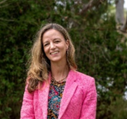
Community Driven Researcher and Clinical Psychologist Kelli MacMillan, PsyD is a clinical research academic, and holds a Doctor of Psychology (Clinical), as well as a BSc (Hons) and a BA/LLB. Kelli is a Senior Lecturer in Postgraduate Psychology at Murdoch University and a Clinical Psychologist. Kelli practices clinically at the Women and Newborn Health Service of Western Australia (WA) and completed a Research Fellowship in perinatal mental health. Kelli has established multiple research projects which seek to address important and current public health issues such as childbirth trauma, coercive control and intimate partner violence, abortion care, vicarious trauma, and access to early parenting support.
Kelli holds leadership roles as the Deputy Chair of the EMCR Committee for Murdoch University, a member of the Perinatal Mental Health Advisory Group for WA, and in the not-for-profit sector as a Council member for a primary and secondary school. Kelli supervises postgraduate and HDR research students and is committed to the translation of research knowledge to community settings. This includes media engagement, as well as recently podcasting, and by traditional publication, national and international conference presentations. Kelli is motivated to deliver change with the application and translation of research into our community.
Dr Kristen Barratt

Kristen is a developmental and cell biologist whose work spans the earliest stages of life to the complexities of vascular disease. She completed her PhD and first postdoctoral training at the Australian National University, investigating the mechanisms underlying congenital brain and heart defects in early embryo development. She is now based at James Cook University in Townsville, where her research focuses on the cell biology driving vascular diseases, including abdominal aortic aneurysm, translating this discovery research into the clinic. Over her career, Dr Barratt has transitioned from wet lab research into bioinformatics, a shift driven by evolving scientific interests and achieved largely through self-directed learning.
Alongside her research, she has maintained a strong commitment to education, spanning demonstrating roles, course coordination, and HDR supervision. She is also a long-standing contributor to the Australian Biology Olympiad, supporting student training for over a decade, and enjoys mentoring and championing Women in STEM through programs such as Curious Minds.
Her work is united by a fascination with cell biology and disease mechanisms, and a conviction that curiosity is the foundation of meaningful science.
Dr Mumtaz Begum
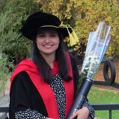
Mumtaz is a nutritionist and an epidemiologist with an extensive experience in teaching and research, with a PhD in Public Health focusing on paediatric and perinatal epidemiology.
As an early career researcher my aim is to identify gaps in women health care, identify risk factors in pregnancy to reduce the preventable causes of health issues affecting women in pregnancy and the subsequent health of their children. I have expertise in using observational data including linked-data or large population-based databases containing electronic health/medical records for conducting studies of various designs to study women's and children's health, perinatal epidemiology, and sexual and reproductive health.
Dr Pieta Shakes

Through her developing program of research, Pieta aims to address critical gaps in Australia’s evidence base, health policy, and care pathways for parents who receive unexpected news about the health, development, or genetics of their unborn baby. By applying systems thinking and building workforce capability and support, she works to embed timely, skilled psychosocial care as a standard part of practice, recognising the well-documented acute and enduring impacts of fetal diagnosis on parents and families. Pieta's clinical career as a mental health nurse and her lived experience of receiving a third-trimester prenatal diagnosis inspire her vision for a health system where psychosocial support is embedded in care as standard, reducing harm and fostering adaptation for families.
Pieta has postgraduate qualifications in mental health nursing, child and adolescent mental health, applied statistics, diagnostic genomics, higher education innovative teaching and is now undertaking a Master of Health Policy and Planning. She is the founder and volunteer Executive Director of Through the Unexpected, and Deputy Course Coordinator of the Master of Nursing at JCU. Pieta frequently offers consultation to services wishing to improve care for parents who receive a prenatal diagnosis, prepares parliamentary submissions, collaborates on guidelines and speaks at events.
Dr Poliana De Barros Medeiros

Poliana is a passionate neonatologist working at the Sunshine Coast University Hospital (QLD) and also finalising my full-time PhD with the Centre of Research Excellence in Stillbirth.
She values the potential of medicine to help people, and on research and science to enlighten and continuously improve prevention and treatment.
Poliana believes that improving knowledge of causes and contributors to stillbirths, neonatal deaths and neonatal near misses can lead to better perinatal outcomes. In her PhD thesis, she is investigating perinatal mortality and neonatal near miss audits to drive practice change and reduce perinatal adverse outcomes. Her long-term goal is to combine an academic and a clinical career to contribute to improve perinatal outcomes.
Dr Raksha Pandya-Wood

Raksha is an interdisciplinary educator and researcher in social sciences, health, and climate literacy. She holds a PhD in Health and Social Science, an MA in Health and Community Development, a BSc (Hons) in Health Studies, and is a Fellow of the Higher Education Academy.
Raksha’s work is rooted in participatory and co-produced research, addressing systemic inequalities through collaborations across the UK and Asia Pacific. She has worked with people living with disabilities, drug users, women, children, Indigenous communities, grassroots organisations, policymakers, journalists, and global bodies including the WHO and UN. Her teaching spans public health, health systems and policy, qualitative research methods, disaster and surveillance and environmental communication.
At the UK’s National Institute for Health Research, she led a national initiative on patient and public involvement and completed a PhD exploring its impact on knowledge mobilisation and health policy.
Currently an Adjunct Senior Research Fellow at Monash University Malaysia, Raksha leads multi-country projects on climate resilience, public health, and inclusive communication, supported by grants from the WHO, Asia Pacific Network, Malaysia’s Academy of Sciences, and IDRC. Raksha serves on the Wellcome Trust’s Climate and Health Advisory Board and is guest editor for a Springer Nature's Research Involvement and Engagement journal's special collection on co-production in Low-Middle-Income-Countries, championing equity, resilience, and global relevance in research.
A/Prof Rebecca O'Reilly

Rebecca has enjoyed a rich, diverse and successful career as a Registered Nurse and Midwife across clinical and academic arenas. Rebecca has completed a Masters in Clinical Nursing and PhD. During her academic career Rebecca has engaged in leadership roles and is currently Deputy Head of School for Nursing, midwifery and Paramedicine at the North Sydney Campus, ACU.
Rebecca has achieved research successes with numerous research grants, publications and conference presentations as well as leadership of and membership in dynamic research teams. Her research portfolio is predominantly focused on Domestic and Family Violence. She also has a research portfolio in Undergraduate Nursing Education. Rebecca is a dedicated and passionate supervisor to Higher Research Degree and Honours candidates and mentor to Early Career Nursing and Midwifery researchers and academics.