Spotlight on Emerging Leaders Fellowship (ELF) Program 2026
Amy Wallace
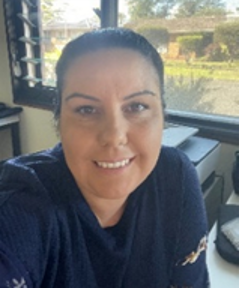
I am a proud Wiradjuri woman and an Aboriginal Research Assistant living and working in Taree on Biripi Country. My heart is in community, and every part of my work on the STARS for Kids project is guided by my culture, my lived experience, and my hope for our young ones to grow up strong, safe, and connected.
I’m currently studying psychology so I can better understand and support the children and families I walk alongside. I carry my heritage, my community, and the voices of our Elders and Leaders with me in everything I do. I am committed to creating change that honours who we are and where we come from.
Melanie Fernando
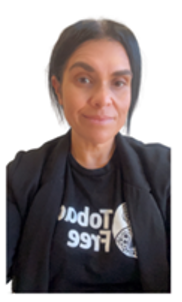
I am a proud Aboriginal woman working as a Senior Researcher and Aboriginal Researcher at the Kirby Institute, UNSW. My work is grounded in culture, community and relationships, with a focus on ensuring Aboriginal voices are centred in health research and evaluation.
I lead qualitative Yarning approaches across projects, creating safe and culturally respectful spaces for community and health staff to share their experiences. I am passionate about working in ways that honour Indigenous knowledge systems and support culturally strong, community led outcomes.
Alongside my research role, I mentor Aboriginal staff, supporting them to grow in confidence and leadership, while navigating institutional spaces and staying connected to culture. I am also stepping into leadership through project management, supporting coordination across multi site projects and contributing to program delivery.
Outside my role, I am a Director of Strong Spirit Services Ltd. and run my own consultancy, Ngama Baayi, where I support Aboriginal organisations, NGOs and partners with culturally informed evaluation and engagement. At the core of my work is a commitment to walking alongside community, strengthening Aboriginal women’s leadership, and creating spaces where our voices are heard, respected and valued.
Dr Zhiqi Liang

Zhiqi Liang is a Specialist Musculoskeletal Physiotherapist and Lecturer at the University of Queensland. She teaches on the Master of Physiotherapy (Musculoskeletal) Program and maintains a clinical role at the Physiotherapy Headache Clinic in the University of Queensland. Her research is on neck pain and headache, especially migraine, exploring mechanisms of neck pain in headache and treatment directions, including patient preferences, for individualised management.
In 2024, she was awarded the David Lamb Award by the International Federation of Manual and Musculoskeletal Physical Therapists Incorporated (IFOMPT) for high quality research that has made an impact to musculoskeletal physiotherapy internationally. Zhiqi has been a musculoskeletal physiotherapist for almost 20 years and her clinical expertise is recognised by Fellowship within the Australian College of Physiotherapists, where she has been actively involved as an examiner and facilitator for the Specialisation Training Program and currently serves on the Board of Censors.
Dr Wathsala Mohotti
Wathsala Mohotti is a data scientist and researcher with expertise in natural language processing, unsupervised machine learning, and data analytics. She holds a PhD in Data Science from Queensland University of Technology (QUT), where her research focused on developing advanced techniques for text similarity, clustering, and dimensionality reduction in high-dimensional data.
With a strong academic and professional background, Wathsala has worked as a lecturer, senior lecturer, and research fellow across institutions in Sri Lanka and Australia. Her work spans diverse domains, including health data analytics, Indigenous health surveillance, environmental monitoring, and agricultural forecasting. She has contributed to major research initiatives such as the PROTECT project and CRC Food Agility, applying machine learning and NLP to real-world challenges.
Wathsala is highly skilled in Python, R, SQL, and data visualization tools such as Power BI and Tableau. She has published in leading international conferences and journals and actively engages in academic and community initiatives, including workshops and research collaborations.
Currently based in Brisbane, she continues to leverage data-driven approaches to generate impactful insights and support evidence-based decision-making in health domain.
Dr Vanessa Wergin
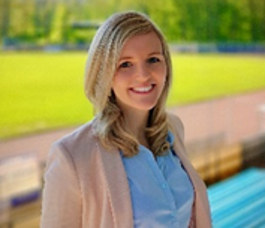
Vanessa Wergin is a researcher and sport psychologist at The University of Queensland (UQ). After retiring from elite sport as an artistic roller skater on the German national team, she studied Clinical, Social, and Health Psychology in Frankfurt (Germany), Amsterdam (the Netherlands), and Milwaukee, (USA). She completed her PhD in Sport Psychology at the Technical University of Munich (Germany) in 2019.
After spending two years as a visiting postdoctoral scholar, funded by the German Research Foundation (DFG) at UQ, she is now a Research Fellow at the university in the Groups 4 Health project.
While her work focuses on implementing Groups 4 Health within existing health programs of community partners, her research also involves developing a leadership training program for group facilitators in health contexts. Drawing on Social Identity Theory, her work addresses a critical gap by equipping facilitators in health contexts with the skills to manage group dynamics, foster a sense of belonging in their groups, and improve health outcomes across diverse health settings.
Dr Salma Arabi

Salma Arabi is an Australian digital health academic and workforce researcher, and Head of Discipline (Digital Health) at Charles Sturt University. Her work focuses on strengthening Australia’s digital health workforce through evidence‑based policy, education, and capability development. She is Co‑Chair of the Australian and New Zealand Specialist Digital Health Workforce Census, leading one of the nation’s most significant workforce data initiatives informing government, industry, and training providers.
Salma’s research has shaped national workforce strategy, including contributions to the Australian Digital Health Agency Capability Action Plan, AIDH workforce initiatives, and industry reports such as the Telstra Health Digital Health Workforce Report. Her scholarship has produced the first national evidence on workforce roles, career pathways, and gender inequities in specialist digital health.
A passionate advocate for equity and inclusion, Salma works to ensure Australia’s digital transformation is supported by a diverse, future‑ready workforce.
Dr Roslyn Donnellan-Fernandez
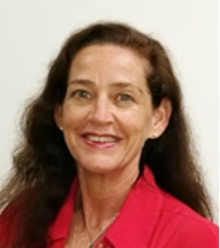
Roslyn is a midwife, currently Director Primary Maternity Care Programs, Griffith University with experience in teaching and curriculum development at three Australian universities. She has practised midwifery over 30-years in public, private and community settings, teaching and mentoring midwives. A PhD with Flinders University (2016) focused on comparative costing and resourcing of midwifery continuity care models for women with complex pregnancy.
Roz actively engages with strategic, policy and funding initiatives for scaling up midwifery models as a primary, public health strategy that enables access and equity for under-served groups / priority populations. A current IBCLC, former mental health nurse, research interests also encompass perinatal mental health, breastfeeding, pharmacology, disability. Roz has published book chapters, journal articles, textbooks: Australian / New Zealand Midwifery text, Midwifery preparation for practice (inaugural edition 2006; revised editions 2010; 2015; 2026), Neonatal Care for Nurses and Midwives (2026 3'rd edition), led authorial team for the Australian/NZ Pharmacology in Midwifery text (2024). An experienced peer reviewer for international journals, her teaching and research are informed by critical emancipatory social theory, principles of life-long learning, advocacy, and political and professional engagement that facilitate transformation of people, structures, and communities toward social justice, health equity, and gender equality.
Dr Reika Masuda

I am a bioinformatician at the Australian National Phenome Centre, specializing in metabolomics and multi-omics data analysis, with a focus on extracting meaningful insights from complex biological datasets. My research integrates advanced analytical platforms such as nuclear magnetic resonance (NMR) spectroscopy and mass spectrometry, contributing to international studies in cardiovascular disease, inflammation, the human microbiome, and healthy aging. Alongside my research, I currently teach at the Master’s level and co-supervise postgraduate students, where I am actively involved in guiding their academic and research development. These experiences have strengthened my commitment to fostering supportive and effective learning environments.
I applied for this leadership program to further develop the skills needed to lead, mentor, and support students more effectively, ensuring they are well-equipped to succeed in their academic and professional journeys. I am particularly interested in building leadership capabilities that will help me navigate diverse student needs, manage collaborative research environments, and guide projects with clarity and impact.
Dr Crystal La Rue
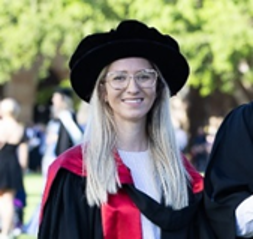
I’m a Research Fellow on the Groups and Relationships to Optimise Wellbeing and Health (GROWTH) project, funded by the University of Queensland’s Health Research Accelerator scheme. I conduct applied research that translates the best available science on social connection into practical programs delivered and evaluated in schools, workplaces, community services, hospitals, and other real-world settings. I primarily work with people navigating life transitions that increase their risk of social disconnection and loneliness. Since 2024, my work has focused on developing a school-based program that strengthens social group belonging to help prevent loneliness among young people. I recently returned from a brief career break after becoming a first-time mum and am excited to strengthen my leadership and think carefully about the next stage of my career.
Dr Danielle Girard
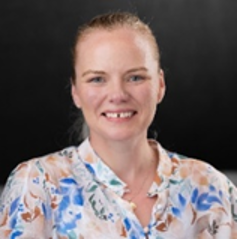
Danielle Girard, PhD, is a Senior Lecturer in the Clinical Exercise Physiology program at the University of Adelaide. She is an Accredited Exercise Physiologist with Exercise & Sports Science Australia (ESSA) and has extensive clinical experience designing and delivering exercise-based interventions for the prevention and management of chronic conditions, with the aim of restoring optimal physical function, health, and wellbeing.
Danielle’s research focuses on exercise-based interventions for cancer, mental illness, and cardiovascular disease, with a particular emphasis on women’s health conditions, including pregnancy loss, endometriosis, and polycystic ovary syndrome (PCOS).
She currently serves as Vice President of the Council of Heads of Exercise, Sport and Movement Sciences (CHESMS), Australia and is a Co-Regional Coordinator for the Women in Sport & Exercise Academic Network (WiSEAN) across Australia and New Zealand Danielle previously held the role of Program Director for the Clinical Exercise Physiology degree for over seven years and is keen to continue expanding her leadership experience and aspirations within the women health research field.
Driven by a strong passion for health and exercise, Danielle is strongly committed to excellence in teaching and research, and to preparing students to become competent, confident, and compassionate allied health practitioners.
A/Prof Ecushla Linedale
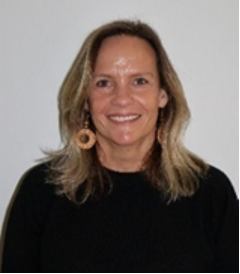
I am the Director Translation and Implementation for the South Australian Health and Medical Research Institutes Omega-3 Test and Treat program (a preterm birth prevention initiative). My role focuses on translating research evidence into practical, system‑level impact. Currently this includes transitioning the program from research into a routine health service and then scaling up nationally. I was previously Deputy Executive Director of Health Translation SA.
Dr Emily Bowden
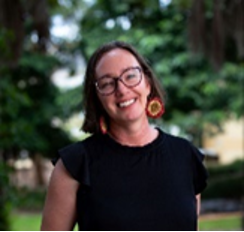
I am an ECR and nurse-midwife with a Master of Public Health and a PhD, with a focus on improving maternal and newborn health outcomes for populations experiencing structural disadvantage. My work uses mixed methods, including qualitative research, participatory approaches, and implementation science, to generate evidence that is relevant and useful locally.
I lead maternal and child health research in Timor-Leste with Menzies School of Health Research. My projects include studies on nutrition in pregnancy, and AI-enabled ultrasound, working closely with Ministry of Health partners, clinicians, and communities. I oversee study design and implementation, support multidisciplinary teams, and engage stakeholders across projects, including a multi-country randomised controlled trial and a nationally representative AMR KAP survey.
I have experience in clinical and program leadership, including maternity services in Australia and maternal and newborn health programs in Cambodia, where I coordinated training and supported staff development. Mentoring and supervision are important to me. I support research and clinical staff in Timor-Leste, have supervised Honours students, and contribute to building local research skills and capacity. My goal is to strengthen research informing practical improvements in maternal and newborn health.
A/Prof Fiona McDermid
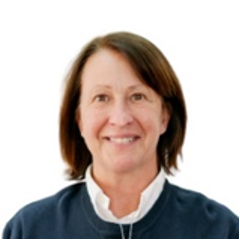
Associate Professor Fiona McDermid is Deputy Head of School (Blacktown) in the School of Nursing, Midwifery and Paramedicine at Australian Catholic University. She is an experienced nurse academic with a background in emergency nursing, midwifery, and clinical leadership, holding a PhD from Western Sydney University alongside multiple postgraduate qualifications.
Her research focuses on women’s health, workforce resilience, and violence prevention. She has particular expertise in menopause, sexual health, and the experiences of vulnerable populations, with projects spanning intimate partner violence, safe hospital environments, and emergency nursing workforce sustainability. Her work has attracted competitive grant funding and contributed to policy and practice discussions in healthcare. Associate Professor McDermid has a strong publication record in leading nursing and health journals and is actively engaged in supervising PhD and honours students. She is committed to building research capacity and mentoring emerging scholars.
Her leadership integrates teaching, research, and service, with a focus on translating evidence into practice to improve patient outcomes and strengthen the healthcare workforce.